widget

Subject Search Bar

Showing posts with label Basic Strokes. Show all posts

Swim Faster Tip on Swimming Above The Water


Swim faster 3 NEW tips. Part 1 - Swim above the water?

This video is part of a set of three tips to swim faster. However, although the other 2 videos, tips 2 and 3, are worth watching they are not that useful to new swimmers. It deals with the questions of whether to swim above the water. 

However this first one I the series touches on a mode of thinking that I find all too common with new swimmers: the belief that you should try and swim above the surface of the water.

Wait... Get Your Lesson Plans Here


Aside from the 3 reasons given for this belief in the video the most common argument I always seemed to get was, “you see hydrofoils / Skiers/speed boats do it, it only makes sense that we should try and do it”.

Now hydrofoils are old technology and I haven't seen that many of them lately so maybe I am showing my age but with the other example I'm sure you get the point.

The problem is that if you try to swim that way, as the video points out, you will get exhausted very quickly. I'm not going to try to convince you of that, I think that the narrator will do just fine at that.

If you are a swim teacher and you have not come across this argument yet from a student, particularly adult students, I'm sure you will eventually. If you are a new swimmer and you are convinced that you will swim better if only you could raise yourself higher in the water, then you need to watch this.

Not only does the narrator define the problem and the reasons for thinking that way but he also explains some very good ways of improving your stroke without being above the water.

Enjoy     
Richard


How To Relax While Swimming: Learn To Swim Stronger & Faster


How To Relax While Swimming

Are you trying too hard? Do you need to relax? Knowing how to relax while swimming is one of the hardest things for a beginner to get the hang of. In fact, even well-established swimmers will often have to be pulled back from trying too hard.

I get to watch a lot of swimming as I walk around the pool. Every level and variation of every stroke will sooner or later reveal itself. I often feel sorry for the ones that are trying to teach themselves to swim as they struggle with things that I know that I can easily fix.

The problem is that, unless I am asked or I am actually their swim teacher, to say anything would be a breach of protocol. People are entitled to swim any way they want. The irony being, that, those who have some very poor technique will often outstrip those that have good technique simply because they are relaxed.


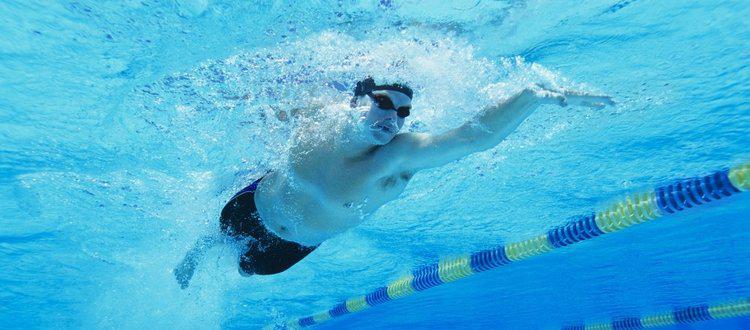
Picture from below of a male swimmer doing freestyle learning how to relax while swimming
Relax, You'll Swim Better 

I Am Not Trying To Encourage Poor Technique

Don't get me wrong, I am not trying to encourage poor technique. Quite the opposite. I also regularly go to watch swimming squads and it is disturbing just how many of those in the squad could benefit from a better technique. (Sometimes I honestly don't know what some swimming coaches are thinking.) Good technique is essential to developing good swimming but one of the best techniques is to relax.

Wait... Get Your Lesson Plans Here


So if you are struggling with your progress in the water, your biggest hindrance just might be that you are tensing up as you swim. The link above to the drill is intended for advanced swimmers but beginners can apply it just as well. Relaxing works for all strokes and it could potentially lead to big gains in your development.

Just one additional hint

Whenever you try something new, it always creates some tension, which is exactly what you are trying to avoid. So before you start, try some deep breathing exercises. I don't mean that you breathe so much that you hyperventilate, that would be worse, I mean just spend some time taking some slow big deep breathes in and a nice slow release of that breath as you breathe out before you start. Just to make sure you are calm before you start.

Enjoy     
Richard


Improve Your Swimming Technique Making Eddies With Your Hands

A Minor Change That May Improve Your Swimming Technique

How can you improve your swimming technique? This is a question that I often get asked by adults. In fact, it is only asked by adults because usually, kids don't care (a fact that surprisingly makes them easier to teach).

The answer may be "Eddies". No, I don't mean the person Edward (Eddie for short). I mean the eddies that we create in the water when we swim.

One of the curiosities of swimming is the means of propulsion. Most people think that when you swim you push the water away from you and that is what makes you move. But this is not the whole story. Like all objects, water wants to stay where it is doing what it is doing and so it resists any attempt we make to get it to do anything else. Instead, when we push water, it creates eddies in an attempt to avoid being in any place other than where we want it to be.

The irony is that the reason we can move in the water is that we can use these eddies to push against and that is what allows us to move. If it weren't for the eddies we would make a whole lot less progress if any at all, in the water because there would be less to push against.

The problem that some swimmers have is that they are not making efficient use of the eddies that they create when they swim.

Wait... Get Your Lesson Plans Here


For Example

If your fingers are too close together or too far apart you are not taking advantage of the eddies you create when you move your hands through the water. The same is true of your feet if you are not allowing your feet to flip flop about you are not taking advantage of the eddies that are created by your kick and the same applies to your arms, you need to move them in such a way as to take advantage of the eddies that your movement creates; that is you should move them in such a way as to take advantage of the eddies they create as they move through the water.

Below is a video that I tried to show what the eddies look like. They are not very successful but if you look closely you can see the eddies between my fingers. The idea is to more or less "Hold on to these eddies for as long as you can when you swim. The more effective you are at holding on to them the more efficient your swim will be.

So the next time your swim teacher asks you to move your hands, legs or arms in a particular way and you don't understand why, think of Eddy... (I mean eddies). Grabbing them (not him) as much as you can, will make a big difference to your swim.

Enjoy     
Richard


The Importance And Role of Roation in Backstroke

Rotation in Backstroke What is it?

Basically, backstroke rotation is turning your body into the water as you do your stroke. Lots of teachers and coaches encourage this but, in my experience there seem to be few that explain why you would do this. So let me try for you.

Like I said few coaches and teachers ever really try to explain why rotation in your backstroke is important and that is supported by the lack of videos available to help explain it; particularly to the beginner. However, the one below is quite good, even if it does ask you for money at the end. You can do that if you like but it is not necessary and full disclosure, I certainly get nothing out of you subscribing.

From my point of view, the most important aspect of the rotation in backstroke is making sure that your arms are not reaching over your head (overreaching) in order to avoid putting a strain on your arms, shoulders and back.

Lack of Rotation in Backstroke is Inefficient

This over reaching is very common in non competitive swimmers and apart from the negative effects it has on your body, can also make your stroke inefficient. In fact, in some swimmers it can almost render their stroke ineffective. The reason for this is two fold:

Wait... Get Your Lesson Plans Here

  1. When you overreach you begin your catch (the point of your stroke where your hands enter the water and start to push the water to begin to give you propulsion), by pushing water sideways, rather than pushing down your body. Pushing water down your body is what moves you in the direction you want to go in the water. Whereas pushing water sideways makes you go sideways and if you do it hard enough with each arm, it will make you Zig Zag in the water. The more you Zig Zag the less efficiently you move in the direction you want to go.

  2. When you overreach you are not grabbing all the water you can because your arm is usually bent, or on the wrong side of your body and not straight. A straight arm reaches further and can, therefore, grab more water. The more water you grab the less effort you have to make in order to move better in the water.

In Other Words

In other words, the rotation allows you to have a straight arm. That, in turn, allows you to grab more water, making you more efficient in the water and less prone to injury.

Rotation can be your best friend in backstroke and whilst you can swim backstroke without it, you are working too hard to do it. So give yourself a break and try rotating as you do your backstroke.

Enjoy     
Richard


What's the Best of All The Swimming Strokes

What are your favourite Swimming Strokes?

Each swimming Stroke has its own advantages and disadvantages. They can be classified according to the level of difficulty.


Three swimmers demonstrate different strokes—breaststroke, freestyle, and backstroke—gliding through a bright blue outdoor pool. What's The Best Stroke?
What's The Best Stroke? 

Here is a swimmer, who wishes to remain anonymous, for whom I have asked people to share their personal tips on what helped them learn to swim.

As always, I may or may not endorse the tip, but the exercise is well worth a trial.

After reading, please feel free to put forward your favourite swimming tip.


Wait... Get Your Lesson Plans Here


1. Breast Stroke

If your goal is to just keep yourself from sinking, then the breast stroke is sufficient.

Advantage:

It is one of the swimming strokes that can keep your head above the water for a long time.

Disadvantage:
It doesn’t provide you with speed. It is one of the slowest swimming strokes that you can learn.

How is it done:
The breast stroke starts by leaning your arms on your chest. The next step is to open your arms to break the water while pulling your head up. It is followed through by a kick. The kick is similar to a frog kick. It resembles the frog’s motion in swimming. By the time your head is back in the water, bring your arms to the initial position.

2. Freestyle

Most intermediate swimmers prefer to learn freestyle. It is one of the most popular strokes among the different swimming strokes.

Advantage:
Freestyle is the fastest way to stroke you can use to travel from point A to point B. Due to the body’s position, it is the most efficient way to decrease water resistance.

Disadvantage:
It is more difficult to breathe in freestyle. The body is positioned in a way that it needs to turn from the side rather than the front. Timing is a crucial factor in breathing.

How is it done:
The swimmer uses an alternate motion of the arms. Your arms should rotate in a windmill-like fashion while kicking your legs throughout the time. As your arms hit the water, your body should rotate to the side, allowing you to get air.

3. Backstroke

It is also one of the most basic swimming strokes taught in early swimming classes. It has the same degree of difficulty as freestyle. Compared to the butterfly stroke, it is much easier to learn.

Advantage:
The position of your face outside the water makes breathing a lot easier. It is not coordinated with the movement of your arms or legs. Using the back stroke, you can swim more because there is a lesser effort to breathe.

Disadvantage:
In terms of speed, it is still slower compared to butterfly and freestyle. Another concern is that you don’t have a clear visual as to where you are heading. Beginners may find it disorienting.

How it is done:
First, lie on your back. Your arms and legs would propel you in the water. To perform a flutter kick, you need to kick your feet in an alternate motion. Once one of your feet kicks up, lower your other foot. At the same time you are making your flutter kick, your arms should alternately rotate on the side.


Enjoy
   Richard

Popular Posts